Earthquake Magnitude Scales

Did you know that scientists no longer use the Richter Scale to measure earthquake magnitude? Now, we tend to use the “Moment magnitude” scale, which was built off of the tenants of the Richter scale.

Charles Richter & Beno Gutenberg developed the first magnitude scale in the 1930’s to quantify earthquakes by comparing the size (amplitude) of seismic waves plotted against distance (as calculated from S-P arrival times).

But there was a problem. They weren’t able to record all of the frequencies from large earthquakes. The Richter scale did a great job with smaller, local earthquakes but it underestimated large earthquakes. Since then, seismologists and engineers have developed more sensitive seismometers that, along with faster computers, have enabled us to record & interpret a broader range of seismic signals. These improvements allow us to better determine the energy released by large earthquakes.

So now seismologists no longer look at just the amplitudes of seismic waves but instead use much more information contained in the seismogram to calculate what is called the “seismic moment” The seismic moment, which defines how much force is needed to generate the recorded waves, is defined by factors like the rigidity of the rocks, the area of the fault that slipped, and how far the fault moved. Again, this is a big deal because seismologists can use the Moment Magnitude Scale to measure and describe the size of earthquakes in terms of the energy released, not just the amplitude of the recorded waves.

(This was originally a Twitter thread I wrote for IRIS)

What is an aftershock?

There is often confusion surrounding the terminology of earthquakes. The largest earthquake in an earthquake sequence is called a mainshocks. Mainshocks are followed by 100s or even 1000s of smaller earthquakes, called aftershocks. Aftershocks are smaller earthquakes on patches of the rupture zone (areas of the fault that broke during the earthquake) and adjacent faults that occur as rocks along and nearby the rupture adjust to the new state of stress. Although there is some variation in what scientists “count” as an aftershock, a common definition is that an aftershock is any earthquake that occurs within one fault length of the fault where the mainshock occurred AND before the level of seismicity in the area returns to what is was before the mainshock happened.

Occasionally, about 5% of the time, an aftershock will be larger than the mainshock. When this happens we change to the terminology to reflect the sizes of the earthquakes and their timing. We rename the first earthquake and call it a “foreshock” and we rename the bigger aftershock and call it the “mainshock”, because it’s now the largest earthquake in the sequence.

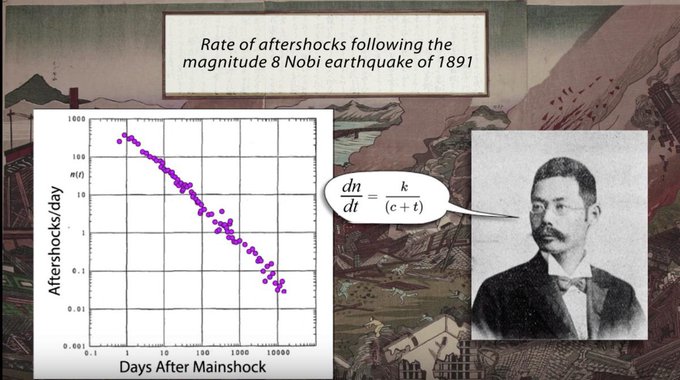
Image of Omori and the logarithmic graphic showing the graph of aftershocks per day (y-axis) versus days after the mainshock (x-axis). Picture from IRIS

A scientist named Omori found that the decay of the aftershock rate was best analyzed using a logarithmic graph of aftershocks per day versus days after the mainshock. He showed that the rate of aftershocks decreased w/ the reciprocal of time since the mainshock. This is called Omori’s Law. Put another way, the most aftershocks will occur right after the mainshock, and the rate of aftershocks will decrease with time.

Although only a small portion of the energy of an earthquake sequence is released by aftershocks, these quakes can still cause damage, or make the damage from previous quakes worse. The *highest rate* of aftershocks occur during the critical first hours and days immediately following the major earthquake. This is exactly the time when emergency workers are locating and rescuing injured people from collapsed or damaged buildings. Because those buildings can shift or even collapse during aftershocks, rescuers are at great risk when their expertise and service is most important.

Are we having more earthquakes than usual?

After every damaging earthquake the world becomes hyper focused on quakes and people start to recognize how many earthquakes there are around the world. They become concerned. People start to ask if there more quakes than usual. This is the frequency illusion, also called the Baader-Meinhof Phenomenon.

Here’s an example – your friend gets a new car and suddenly you notice that same make and model of car all the time. There aren’t more of that car model suddenly, you’re just more aware it. That’s the frequency illusion. Earthquakes are similar. Most people don’t think much about them until a large, unusual, or damaging one happens. And then suddenly they notice all the other quakes around the world and think WHOA!!! What? But there are a few other things at play as well.

Large, damaging or unusual earthquakes also makes news agencies more likely to cover earthquakes they may not have paid attention to otherwise. Additionally, better seismic networks means we can detect more earthquakes, and greater global connectivity means we hear about earthquakes in remote locations more often.

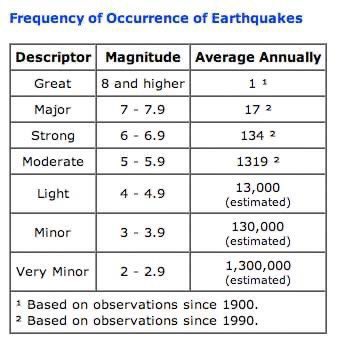
Frequency of earthquake occurrence from SERC

On average there are 15-18 magnitude 7-7.9 quakes every year and ~10x that many magnitude 6-6.9 earthquakes. So while it may seem like there are more quakes than normal the world is not under any kind of unusual stress, and no, a “big one” is no more likely now than at any other time.

There is natural variability within any system and the earth is no exception; not every year will “follow the rules”. But when you look at the longer term average, the number of earthquakes is pretty constant.

But don’t take my word for it – take a look at the data! The USGS even has this page of earthquake statistics so you can get an idea of how many quakes occur around the world every year.

Earthquake Prediction?

Earthquake prediction is, predictably, a topic once again. It doesn’t really matter when you’re reading this because it’s almost always a topic, but it becomes especially problematic after large earthquakes. Why? Because earthquakes are scary and people want the reassurance that someone, somewhere, can tell them what to expect.

Earthquake predictors come in lots of different “flavors”. Some have good intentions, many are in it for clicks or money (monetized websites / YouTube channels or the like). All of them cause needless fear and anxiety. Many claim that scientists are threatened by them, or are silencing them. This is not true. But to understand why this isn’t true requires some insight into the process of science, which isn’t always clear. I’ll try to outline it briefly.

When a scientist has an idea they test that idea to see if it supports the observations. They test it over and over to see if it always works, to see if they can reproduce the results. If it does, they write about that idea – the idea itself, the methods used to test the idea and the results. They write about WHY that idea works, the mechanism by which it works. Then they submit that paper to a journal. But that’s not the end!

Then, that paper (but really the idea) is assessed by other people that study the same thing. They TRY and poke holes in the idea. Not because they’re mean, but because they are also testing the idea, looking to see if it actually explains the observations, and how well. They may try and reproduce the results themselves, to make sure that the idea works. They will also look at the WHY – can the proposed reason explain the results? If everything checks out and the experts agree, then the paper is published in the journal where it can (and will) be debated some more by the scientific community at large. If the idea doesn’t stand up to scrutiny, the paper is rejected & the reviewers give comments about the weaknesses of the idea or the why.

This process is tedious but important to ensure rigor and reproducibility in scientific information. Anyone can submit their ideas to journals to be assessed in this way, which is called “peer review”. Let me repeat that – anyone can submit. However, if your idea isn’t reproducible or your “why” doesn’t hold water, your idea will be rejected. That goes for professional scientists or citizen scientists – any and everyone. So when predictors say they’re being silenced or ignored they might mean their idea didn’t pass peer review but usually it means that they have not (or have refused to) go through peer review.

Is peer review perfect? No. But it’s pretty good at winnowing out blatantly incorrect ideas. Does scientific understanding change? Yes! New data sometimes leads to changes in our understanding which can result in a new scientific paradigm. Carl Sagan said it well – “In science it often happens that scientists say, ‘You know that’s a really good argument; my position is mistaken,’ and then they would actually change their minds and you never hear that old view from them again. They really do it. It doesn’t happen as often as it should, because scientists are human and change is sometimes painful. But it happens every day.”

How does this paradigm shift happen? Slowly. And with EXTENSIVE peer review and debate and testing of the new idea. Why? Because extraordinary claims require extraordinary evidence. So if you think you have an idea that will change how we fundamentally understand the earth, like earthquake prediction, you better be prepared to back it up.

All this to say, so far no one’s ideas about earthquake prediction have been reproducible to the standard of science. They can claim it, but they have yet to back it up.

No one can predict earthquakes.

Breaking in to SciComm

How do you break into scicomm? This is a question I get A LOT, so I wanted to summarize a few things that might be helpful. It’s important to remember that not all paths are the same, and that what worked for me may not work for others. Additionally, there are lots of different types and flavors of scicomm, from science policy to scientific storytelling, and they require different skills, knowledge, and experience, so what’s needed and required may vary between subfields. Simply put, though: When it comes to getting jobs in research, we need educational credentials; for jobs in science communication, we need to demonstrate experience. All that being said, here are some very general things that you can do to set yourself up for success in science communication.

  1. Get training

Communication is a skill that must be learned and practiced. Take advantage of communication courses or workshops offered by your university or scientific society (for instance, AGU Sharing Science). There are also incredible free resources online (check out the bottom of this page) that you can use to learn recommended practices and improve your communication skills.

  1. Read the literature

Science communication is a field of study as well as a community of practice. It draws on theories from sociology, psychology, education and more, so it’s important to understand the field of science communication in addition to the science that you want to communicate. Be sure to read and study the seminal literature, just like you would when beginning a research project.

3. Make a website

People that communicate science need to be visible. Creating a personal website is a way to increase your visibility, showcase your skills, improve your legitimacy and have a “clearinghouse” for your work.

  1. Write a blog

This could be part of your website or a separate site. The idea is to showcase your work and let potential employers see your writing style, the types of science you cover, and the scope and breadth of your work. This is also a great way to get practice writing about science for different audiences and is a tried and true method for honing your scicomm skills. It’s also a valuable form of science communication in its own right!

  1. Get your writing into the world

Your blog doesn’t have to be the only way you share your work. Writing Op-Eds, joining writing communities like Massive Science, or writing for other outlets like The Xylom can be important tools for getting your work (and your name) out into the world. Some organizations like Temblor even have “externships” to help to get you started. Plus, if you have someone else editing your work, you’ll learn to be a better writer.

  1. Speak your science

Writing isn’t the only form of scicomm, obviously. Make sure your presentation skills are on point! Be sure to follow recommended practices like avoiding or defining jargon, being aware of body language, speaking clearly, and considering your audience when making your presentation. Also, the more you practice public speaking the better speaker you will become! So practice, practice, practice!! Organizations like Story Collider and Skype A Scientist are good ways to get practice speaking in front of different types of audiences.

  1. Work at a museum or other informal learning space

Working or volunteering at a museum or in any other formal or informal educational context will hone your skills communicating with a non-expert public, often of multiple generations and widely varied backgrounds. These opportunities also give you real-time feedback (if you’re paying attention!) to what works and where you lose people. You will learn a lot about landing a message or concept–which is the foundation of any medium of communication.

8. Engage on social media

Social media can be a critical component of science communication, so having strong social media skills on multiple platforms is important. Additionally, social media is a way to make a name for yourself as a communicator and is an important networking tool. Many of the opportunities that have come my way have been the result of connections made on Twitter! For information on social media for scientists watch my video.

  1. Utilize your scientific societies

Many scientific societies provide opportunities for improving science communication skills through workshops, community events and publications. For instance, AGU has their “Sharing Science” program that provides lots of resources for scicomm as well as a science communication and advocacy program called “Voices for Science”. Science communication sessions are becoming more common at scientific meetings; seek them out, and attend talks and posters! Also, Science Talk is a fairly new conference just for science communication. Which brings us to our next point…

  1. Join communities of practice and network

There are lots of people working in the scicomm space, some professionally and some personally, and this creates opportunities for engagement. The more people that you get to know that are working in science communication the more likely you are to hear about or be recommended for opportunities when they arrive. Find people on LinkedIn, Twitter, Instagram, TikTok, etc., and at conferences!

Here are some helpful links to get you started.

Get Skills

Get Experience

Many thanks to Beth Bartel and Adam Pascale for their contributions and editing!
Flying the faults of Southern California

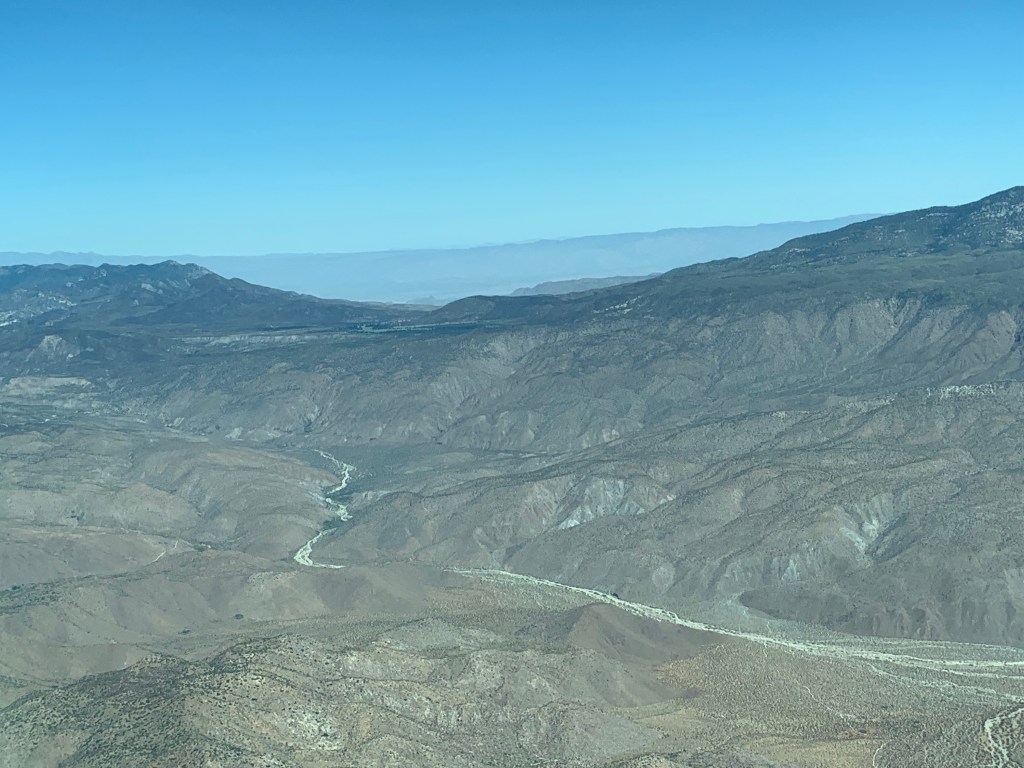
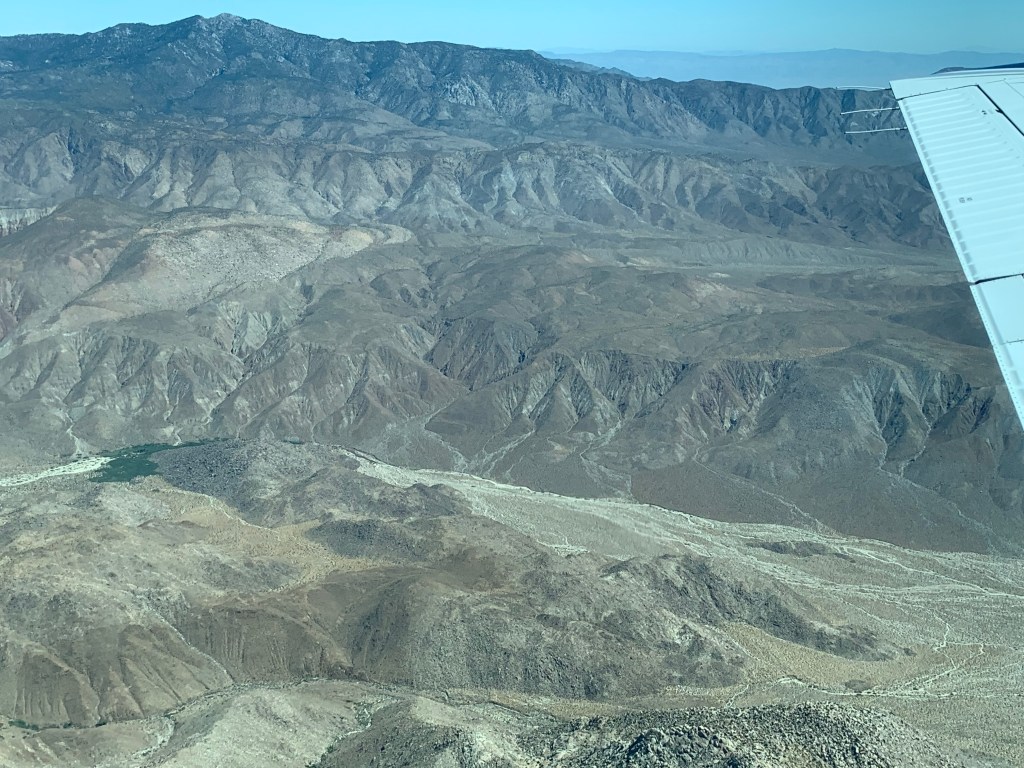
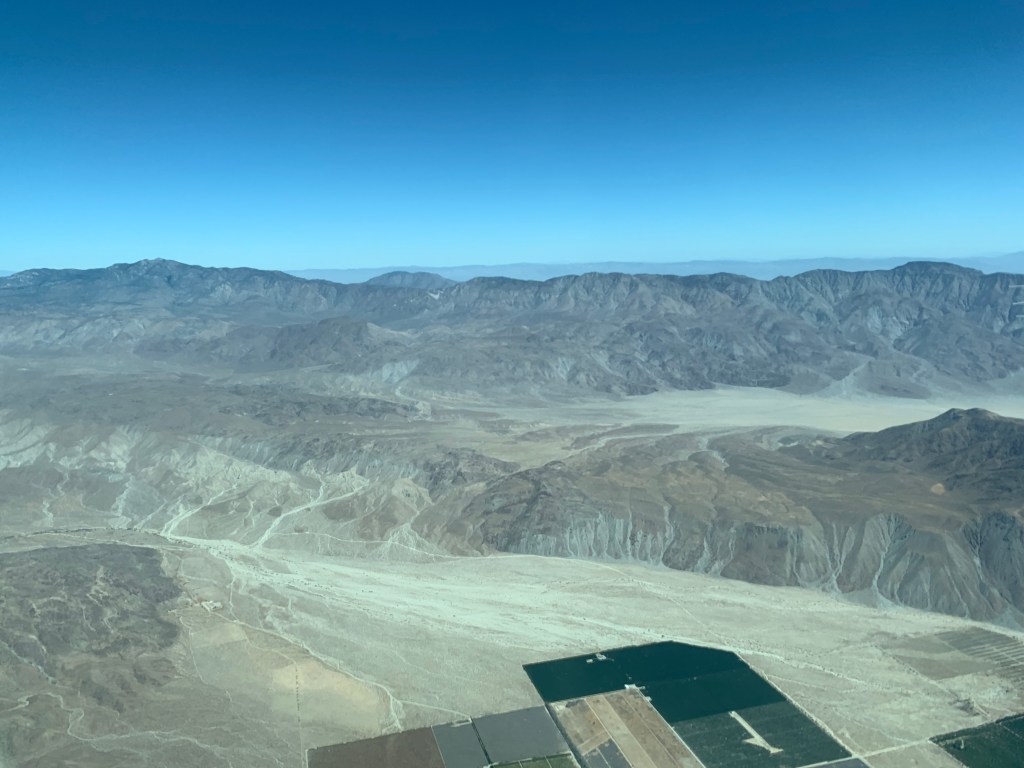
I married in to a family of pilots. One of the perks of this is that once in while they’ll humor me and fly me around so that I can see Southern California from the air; more specifically, I can see the amazing faults and stunning geomorphology of Southern California.

Many thanks to my husband Scott and father-in-law Fred for flying me around to see the faults.

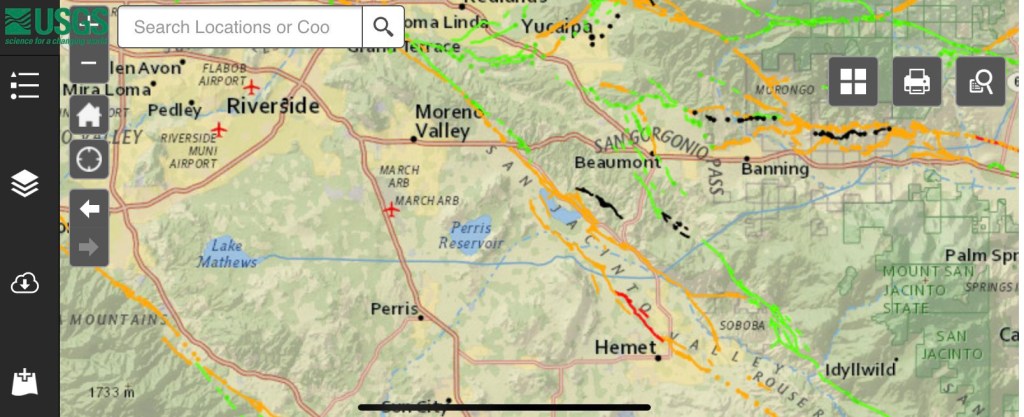
Yesterday we flew along the Elsinore and San Jacinto Fault zones. These faults are some of the many faults (including the San Andreas) that are helping to accommodate motion between the Pacific and North American Plates.

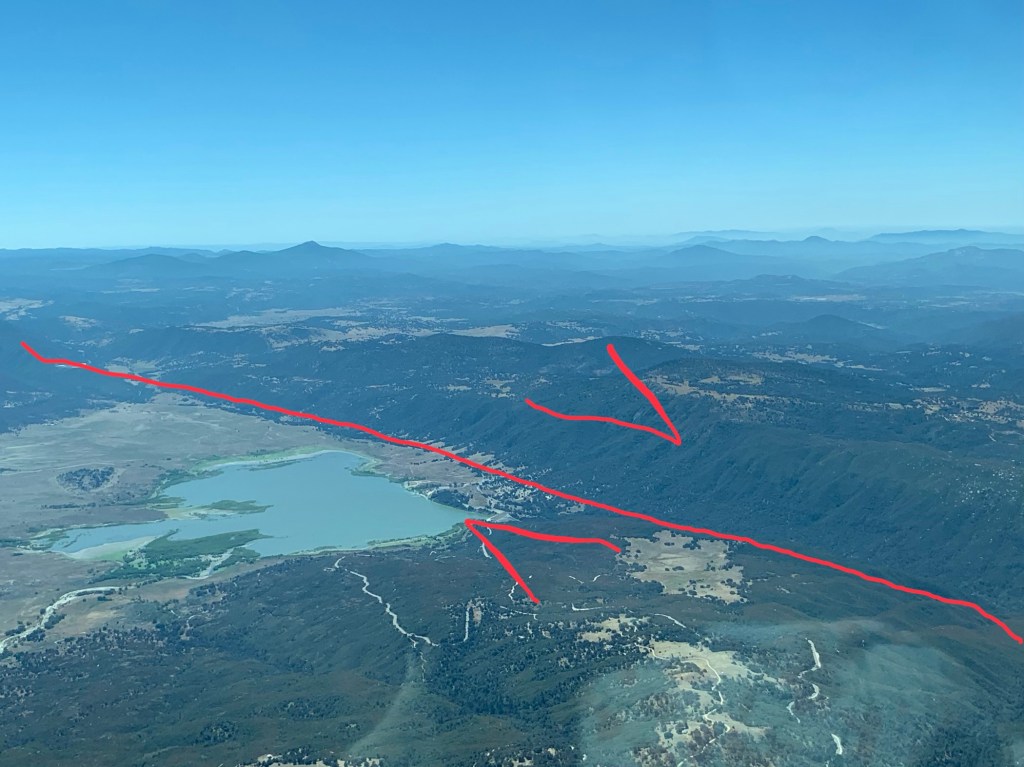
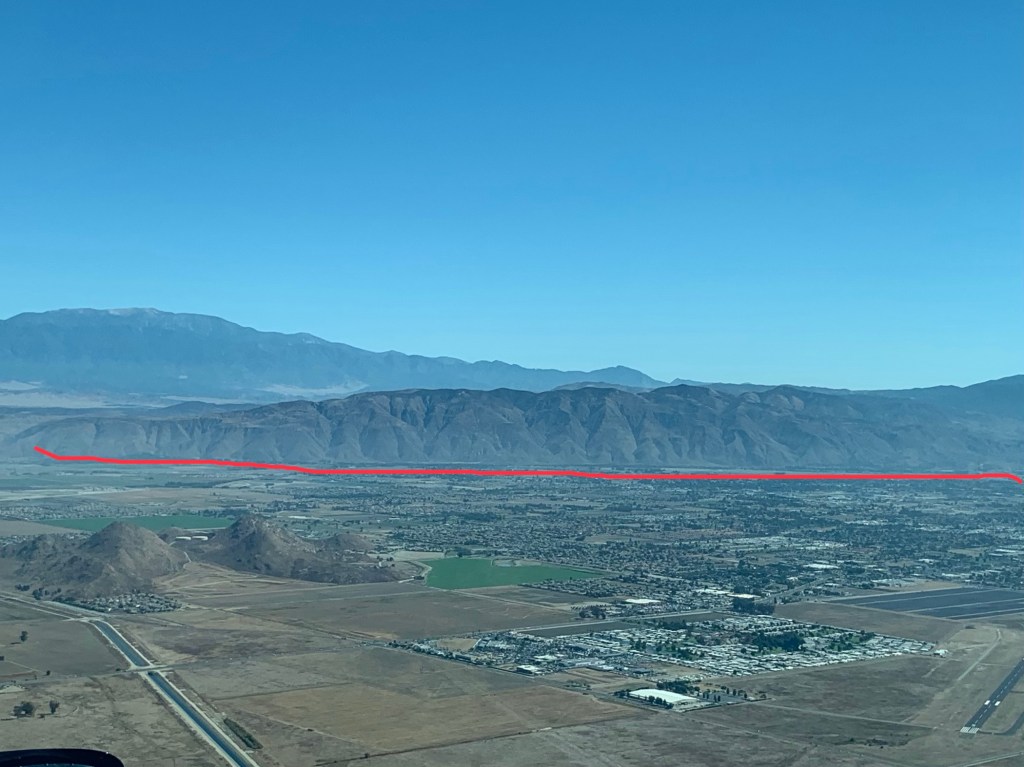
I’ve roughly annotated the photos below (on my phone, while in the air) so that the fault location is more obvious for those who aren’t used to seeing such features in the landscape. It’s important to keep in mind that faults are rarely just one simple strand; they are fault zones. Fault zones are broad zones of deformation with many fault strands and areas of crushed and deformed rocks – some fault zones can be km wide. So my annotations are gross oversimplifications that are showing the rough location of the most prominent strand that I could identify from the air.

One more quick note – geologists locate faults by looking for particular things in the landscape. The faults I looked at were right lateral strike-slip faults, which means that one side of the fault is sliding horizontally past the other so that everything on the other side of the fault looks as if it moved to the right. The landscape features (or geomorphology) that I was looking for were offset streams, changes in the slope of the land, offset ridges, lines of vegetation (water moves easily through the broken rocks of the fault so trees often grow along faults) and other changes in the shape of the land that are associated with faulting. When you see many of these types of features and draw a line between them we call that the fault trace, or the place where the fault intersects the surface of the earth. Not all faults make it to the surface – these are called blind faults. The Northridge earthquake occurred on a blind thrust fault.

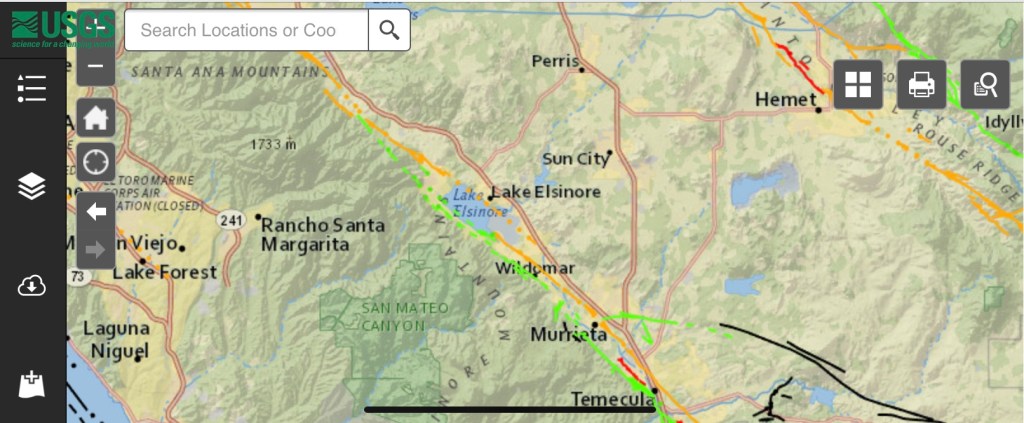
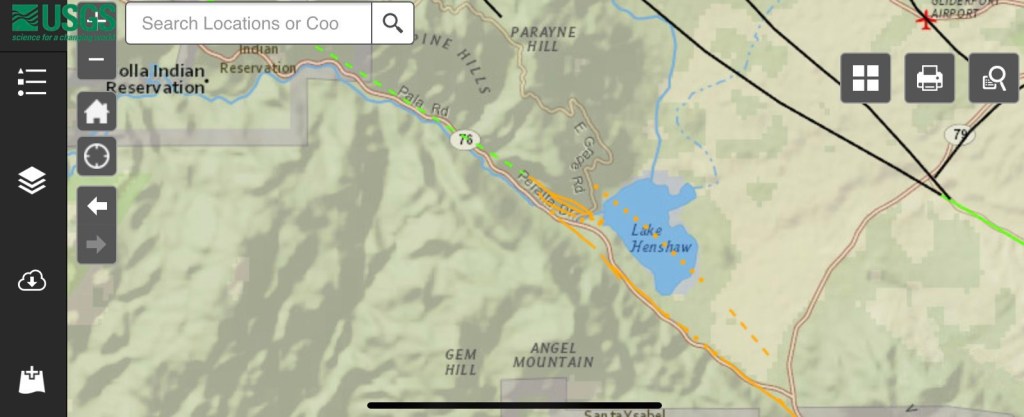
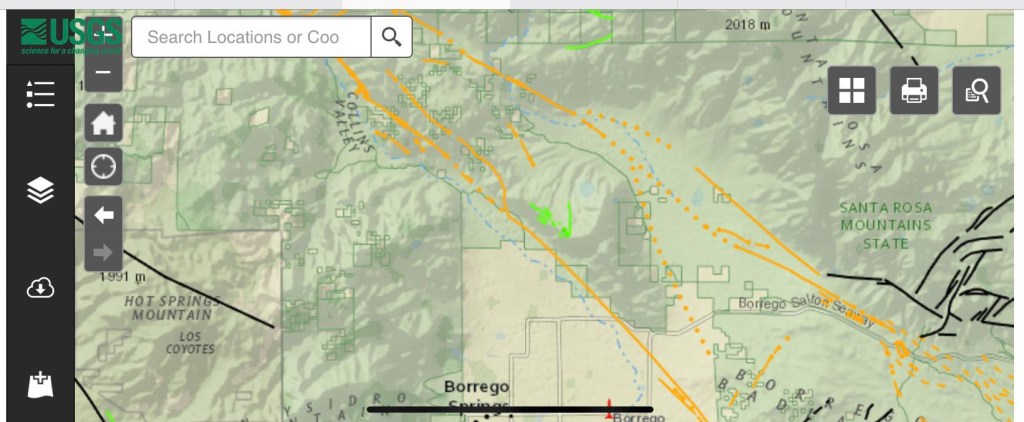
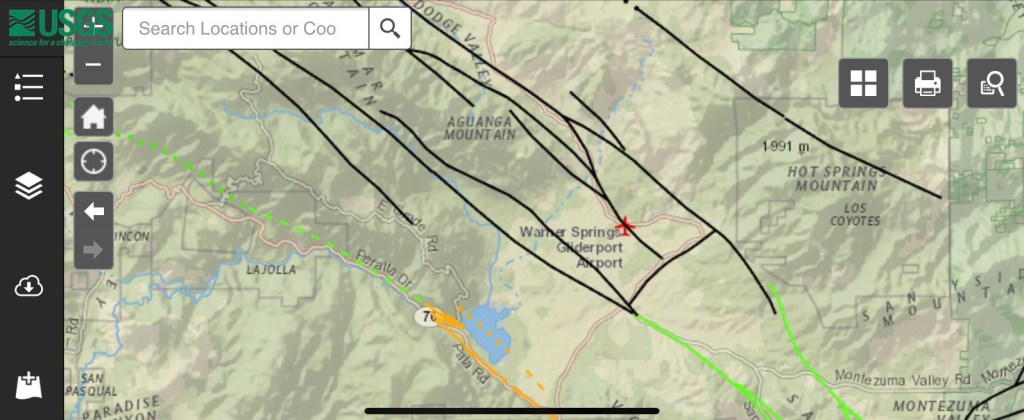
All of the maps are from the USGS Quaternary Fault and Fold Database. The lines are the faults; the different colors indicate the last known activity on that fault (more info available on the USGS website linked above). Solid lines means geologists are very confident that the fault is in that location, whereas dotted lines are places where they have inferred that the fault is likely to be.

The Elsinore Fault

Lake Elsinore is a sag pond that was formed by multiple strands of the Elsinore Fault.

A sag pond is a common feature found along strike-slip faults. When there are two strands of a strike-slip fault that are parallel to each other they will sometimes pull apart a little bit, forming a depression that fills with water – this is the sag pond. In other areas parallel (or sub-parallel) strands may squeeze together a bit, and this forms a pressure ridge (sometimes called a shutter ridge). A famous pressure ridge is Dragon’s Back along the San Andreas Fault.

Lake Elsinore
Lake Elsinore
This is where the I15 crosses the Elsinore Fault.
The following images are of a more southern location of the Elsinore Fault near Palomar Mountain.
Lake Henshaw, just southeast of Palomar Mountain. This is another sag pond.
The Elsinore Fault at Lake Henshaw. The terribly drawn arrows show the relative direction of motion of each side of the fault (right lateral).
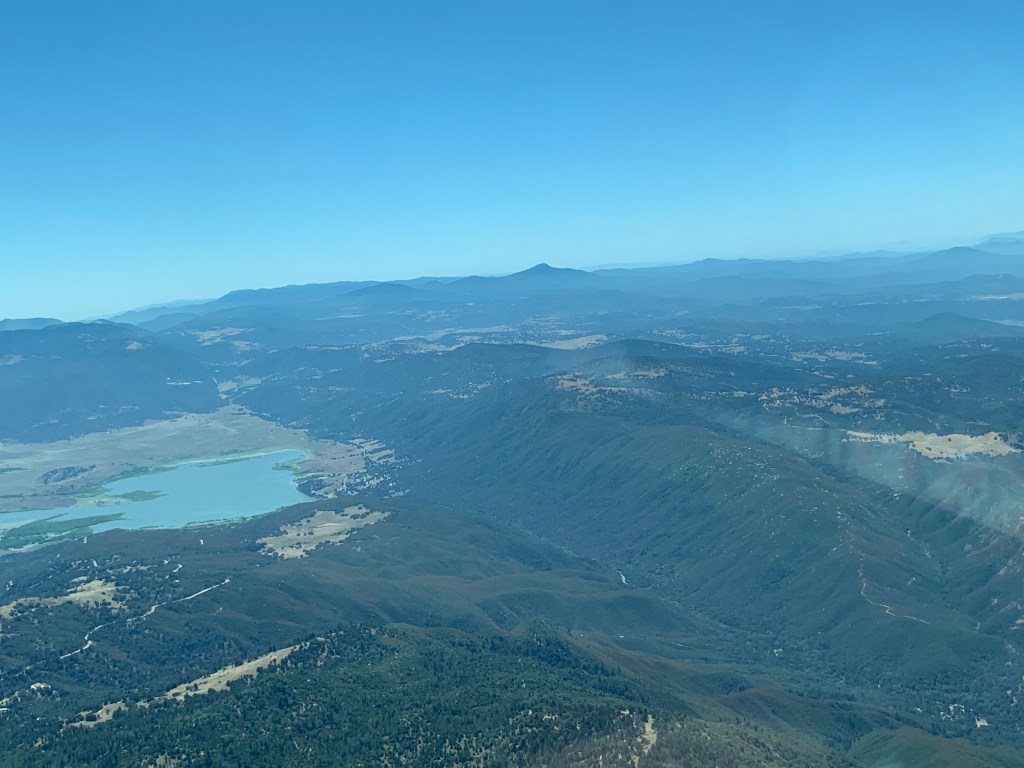
The Elsinore Fault
The fault is running through the valleys (which it helped to form).

The San Jacinto fault

The photos below were taken while we were southwest of the fault looking northeast.
San Jacinto Fault near Hemet
The San Jacinto fault near Hemet (the Hemet airport runway is in the foreground).
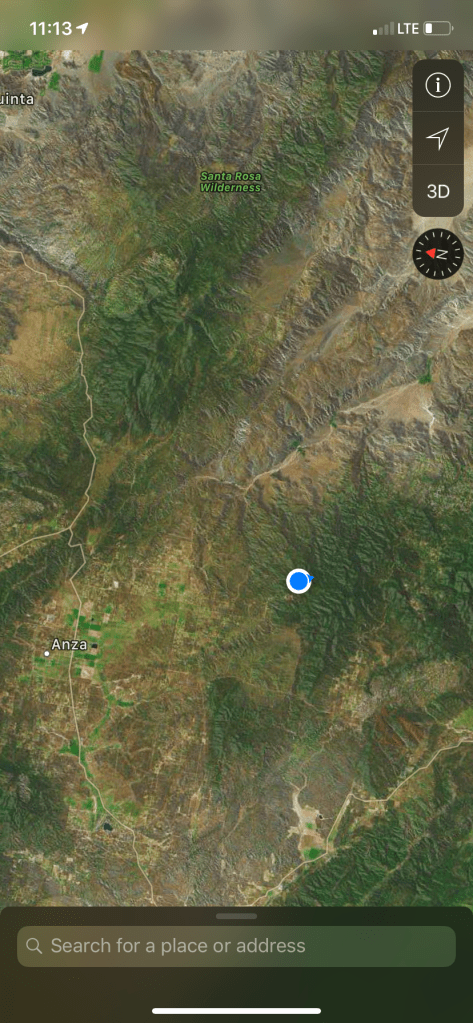
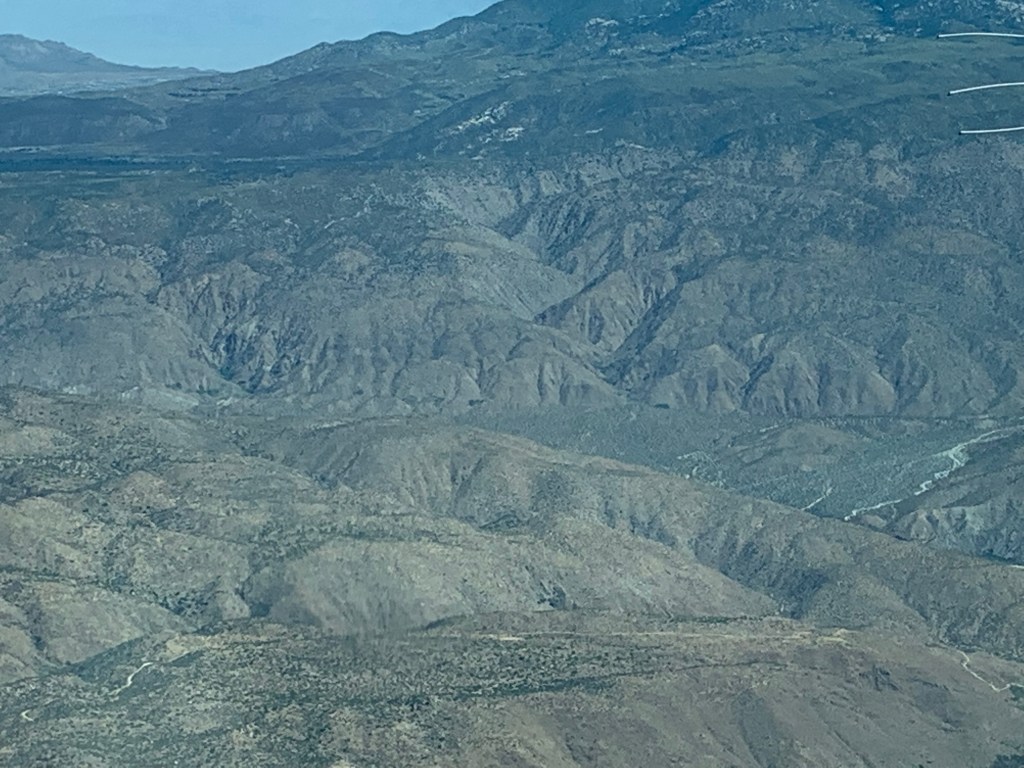
The following pictures were taken looking NW (over the left wing) from around the location of the blue dot as we flew northeast.
Do you see what looks like a line going across the center of the picture? That’s the fault. If you look closely you can see vegetation growing along the fault, a change in slope and offset channels.
A different view of the fault shown in the photo above
Such beautiful geology and geomorphology along the San Jacinto fault!
The next few photos are of the San Jacinto Fault near Borrego Sorings. As you can see from the map this area is very tectonically complex.
San Jacinto fault north of Borrego Springs
San Jacinto fault strands NE Borrego Springs.
San Jacinto fault
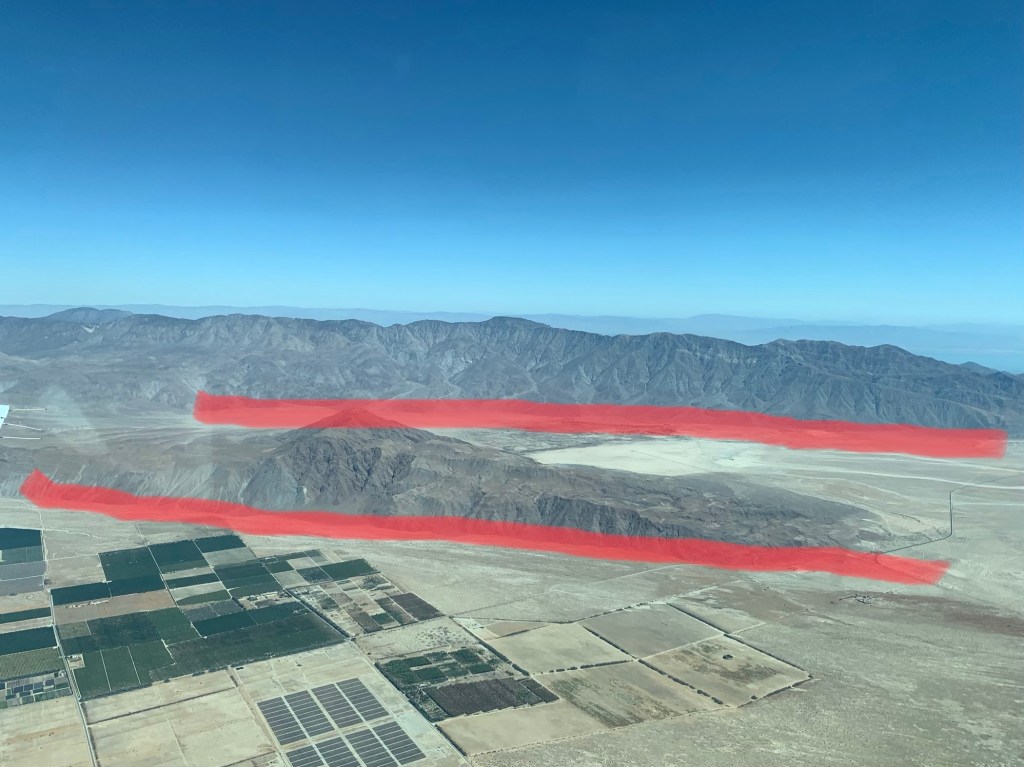
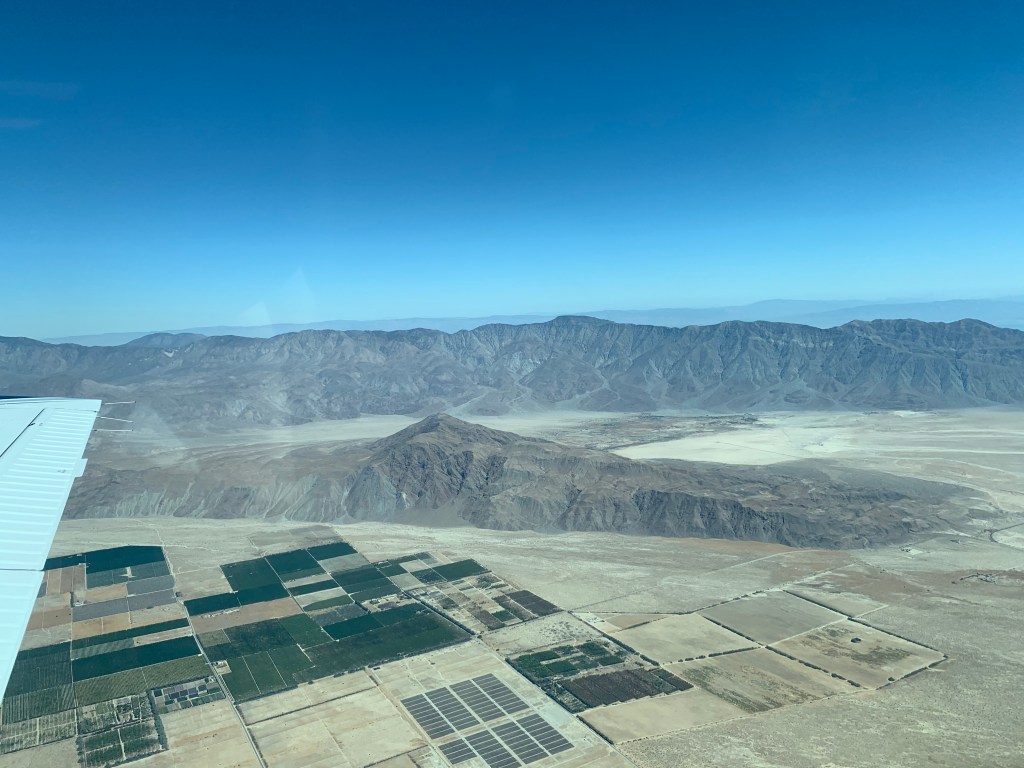
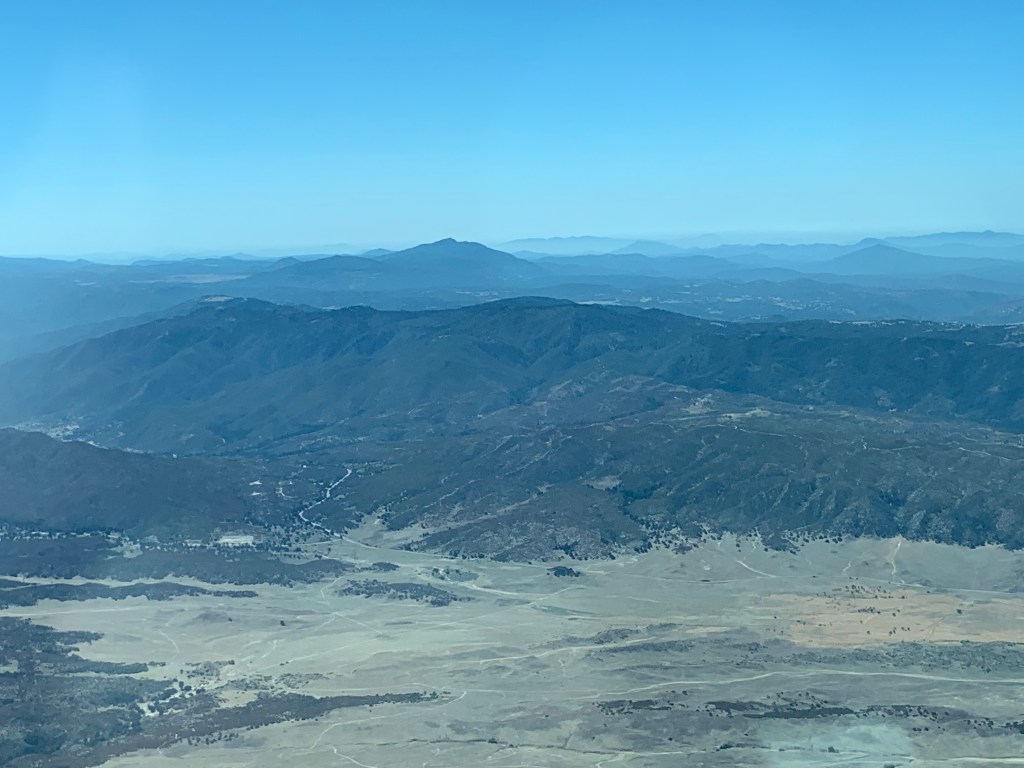
The following images were taken near Warner Springs. I think the fault is one of several fault strands that the USGS Fault and Fold database call the San Felipe fault (shown in black).
San Felipe fault
Lots of fault strands in this photo – I just annotated one.

When you talk about earthquakes and faults in Southern California you hear a lot about the famous San Andreas, but all of these faults (and many many more) are capable of producing damaging earthquakes. To learn more about how to prepare for earthquakes visit these great sites – Shakeout, Putting Down Roots in Earthquake Country, and Ready.

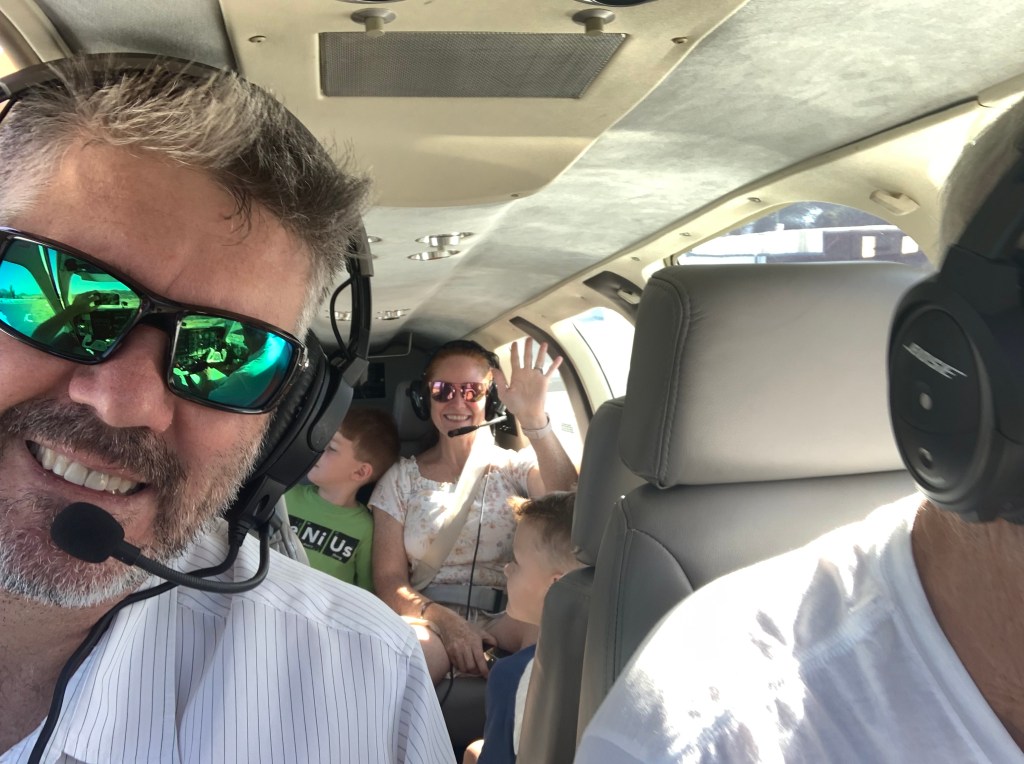
My father-in-law and his copilots

Thanks again to Fred and Scott for flying us around and giving me the opportunity to see these amazing features from the air! And thanks for reading!

Valuing science communication

I’d like to briefly draw attention to part of our recently published Science Communication Training paper called “A Need for a Changing Value System”.

Science communicators often fall victim to the “Sagan effect“. People assume that if they do good science communication they must do bad research. (Fake News!) The truth is that, like research, science communication and outreach is a set of skills that must be learned and practiced, but when this skill building isn’t fostered and valued it hurts us all.

Scientists and policy makers consider creative and skilled science communication both an asset to and a fundamental element of science. However, few institutions within science explicitly support science communication efforts within their reward systems. We’ve got to change this!

Effective communication is critical for supporting the next generation of the geoscience workforce, attaining and maintaining funding, increasing public support of both basic and applied research, giving back to the taxpayers who fund scientific research, and enabling science-informed decision-making.

In short, science communication is important for science, scientists and society and we need to value it and support the people doing it.