
I believe science is for everyone.
We use science to understand the world around us and to make decisions about our lives, our communities, and our future. Science shouldn’t be confined to laboratories, journals, or scientific conferences. It should be part of our classrooms, communities, conversations, culture, and decision-making.
People should have access to science. They should be able to understand it, question it, participate in it, and use it. And people who haven’t traditionally seen themselves represented in science should be able to see a place for themselves there, too.
There isn’t one path to becoming a scientist.
Mine started in theatre.
I was a theatre kid all through high school and my undergraduate degree is in Theatre. I grew up caving and was interested in geology. I even got a secondary major in geology. But I never considered doing it as a career – I was an actress, not a scientist. After college I moved to Hollywood to pursue a career in Theatre. But then I experienced the 1999 Hector Mine earthquake.
That event shook me to my core, and awakened a curiosity that eventually led me to volunteer with, and get a job at, the U.S. Geological Survey. I went there because I wanted to understand earthquakes. But I discovered something else too.
At the USGS, I saw firsthand the power of good science communication and education for people who live in earthquake country. Earthquake science wasn’t abstract to the people experiencing earthquakes. They wanted to understand the faults near their homes. They wanted to know what to expect and how to prepare. They wanted to know what scientists knew—and what they didn’t.
Helping people make those connections showed me that scientific impact wasn’t limited to making discoveries. Helping people understand those discoveries mattered. Using that information to make people and communities safer mattered. That realization became my North Star.
Learning how science is made
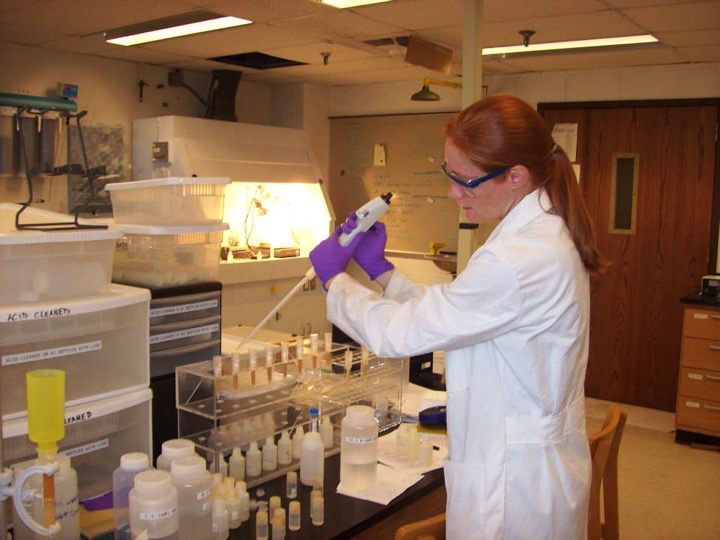
I eventually returned to school to understand earthquakes at a deeper level, earning an MSc in geology from Ohio State University and a PhD from Arizona State University. Research taught me how scientific knowledge is actually created. Fieldwork. Lab work. Evidence. Data. Debate. Uncertainty. Revision. Collaboration. Failure. Discovery.
It also made me a better science communicator because I wasn’t simply explaining scientific findings and results. I understood the process that produced them.
My geoscience work is the foundation for the other parts of my career.
Taking science where people are
While I was in graduate school and working with EarthScope, I began experimenting with social media as a way to communicate science. At the time, bringing serious science onto social media was viewed as deeply unserious by many scientists. But people were there. They were curious. They were asking questions. And I believed science should be part of those conversations. So I started bringing it there.
Research and communication weren’t competing identities for me. They were becoming increasingly intertwined.
At the Incorporated Research Institutions for Seismology (IRIS), my work included science communication, education, training, and workforce development. At NASA, I brought that experience to science communication at an institutional scale.
Helping more people see themselves in science
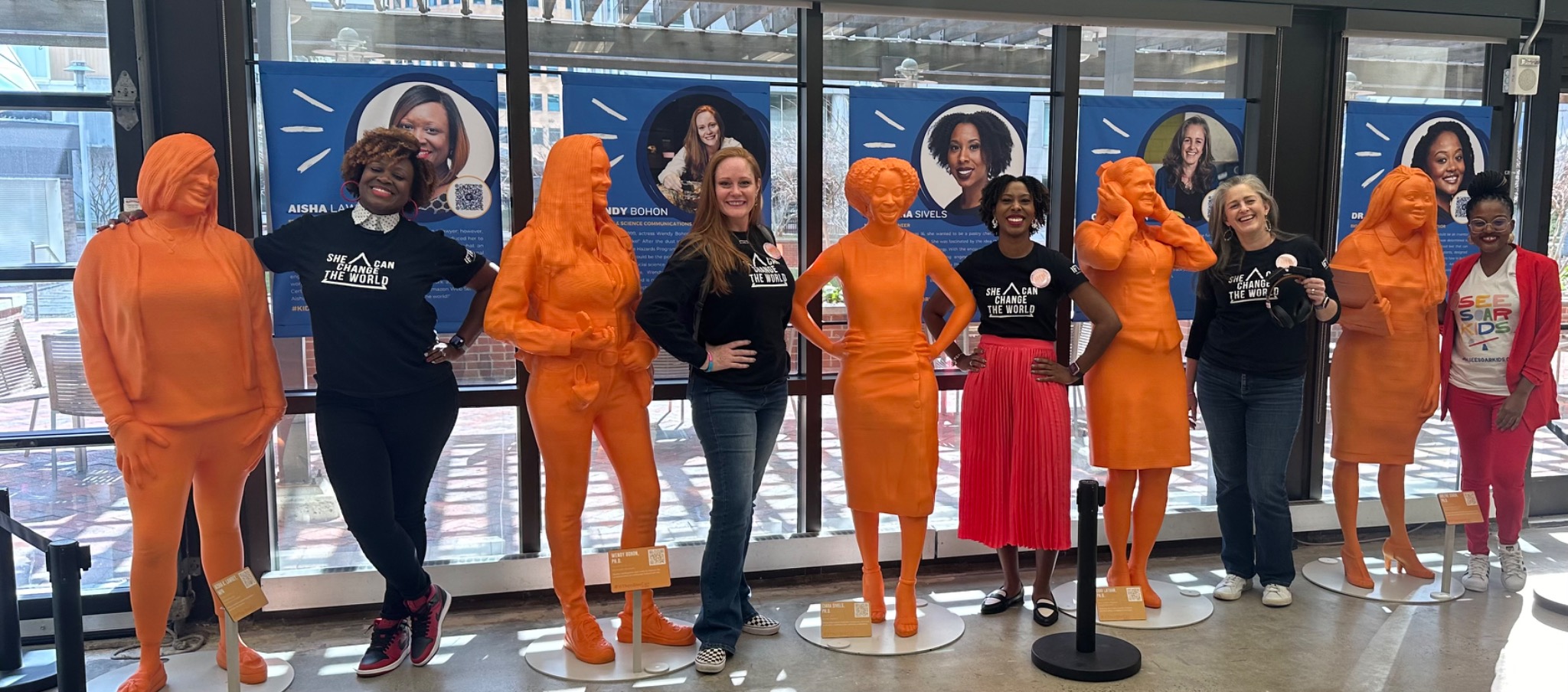
As my career developed, another question became increasingly important: Who gets to see themselves as someone who belongs in science?
Through IF/THEN, 500 Women Scientists, mentoring, public engagement, and other work, I’ve tried to help broaden both access to science and our collective picture of who can be a scientist.
These efforts are part of my broader science communication and education work.
An expanding definition of impact
Over time, the balance among these parts of my work has changed. I moved from primarily conducting research while also communicating science, toward science communication and education becoming a larger part of my professional work, and eventually toward my current role facilitating science and its application.
I didn’t stop being a scientist when I became a science communicator. I didn’t stop being a science communicator when I became a scientific leader. Each new part of my career grew from what came before it. It wasn’t a series of reinventions. It was an expanding definition of how I could have impact through science.
Today, as the Branch Chief of Seismic Hazards and Earthquake Engineering at the California Geological Survey, my work is increasingly focused on creating the conditions in which geoscience can have impact.
I help lead scientists and scientific programs, build connections among people and organizations, develop scientific and organizational priorities, and help move research toward the decisions and applications it can inform. It’s a different relationship with science than the one I had while sitting in a paleoseismic trench or picking zircons. But underneath it is much the same question I encountered early in my career: What can science help us do?
I’m still fascinated by earthquakes. I still collect rocks. I still love the moment when someone sees something in the landscape—or understands something about the planet—that they couldn’t see five minutes earlier.
And I still believe that science becomes more powerful when more people can understand it, participate in it, and use it. Science is for everyone.
Leadership & Service
My service connects geoscience research, education, and application. Through committees and advisory boards, I contribute to work that reaches beyond any one project or organization.
- National Academies Committee on Solid Earth Geophysics — Member
- CRESCENT — Cascadia Region Earthquake Science Center — External Advisory Board
- USGS ShakeAlert Ready Outdoors — External Advisory Committee
- Geological Society of America Education Committee — Member
- AGU Awards Committee for Education — Member
View my CV for the full list of appointments and service.
Watch my journey in STEM
Geoscience · Science Communication & Education · Speaking & Media · Contact

